Denver Sprinkler Winterization & Blowout Guide: When, Why, and How
If you live along the Front Range, a sprinkler blowout isn't optional — it's the single most important thing you can do each fall to protect your irrigation system. Denver's climate swings hard and fast: a 70°F afternoon in October can flip to a hard freeze overnight, and any water left in your sprinkler lines can crack pipes, split valves, and shatter backflow preventers.
When to schedule a sprinkler blowout in Denver
For most Denver-area homeowners, the sweet spot is early-to-mid October. You want to winterize before the first hard freeze (typically late October to early November), but not so early that you miss out on warm-weather watering. Communities like Brighton, Thornton, Westminster, Arvada, and Broomfield all follow a similar timeline.
Watch the 10-day forecast in early October. Once overnight lows start dipping toward the low 30s consistently, it's time to call.
Why a proper blowout matters
- Water expands when it freezes — even a small amount left in a poly or PVC line can split it open.
- Backflow preventers are expensive — a cracked backflow assembly can cost hundreds to replace and is one of the most common freeze casualties.
- Valves and solenoids trap water in low spots that gravity alone won't drain.
- Sprinkler heads can crack at the riser or seal, leading to leaks the following spring.
What a professional blowout actually involves
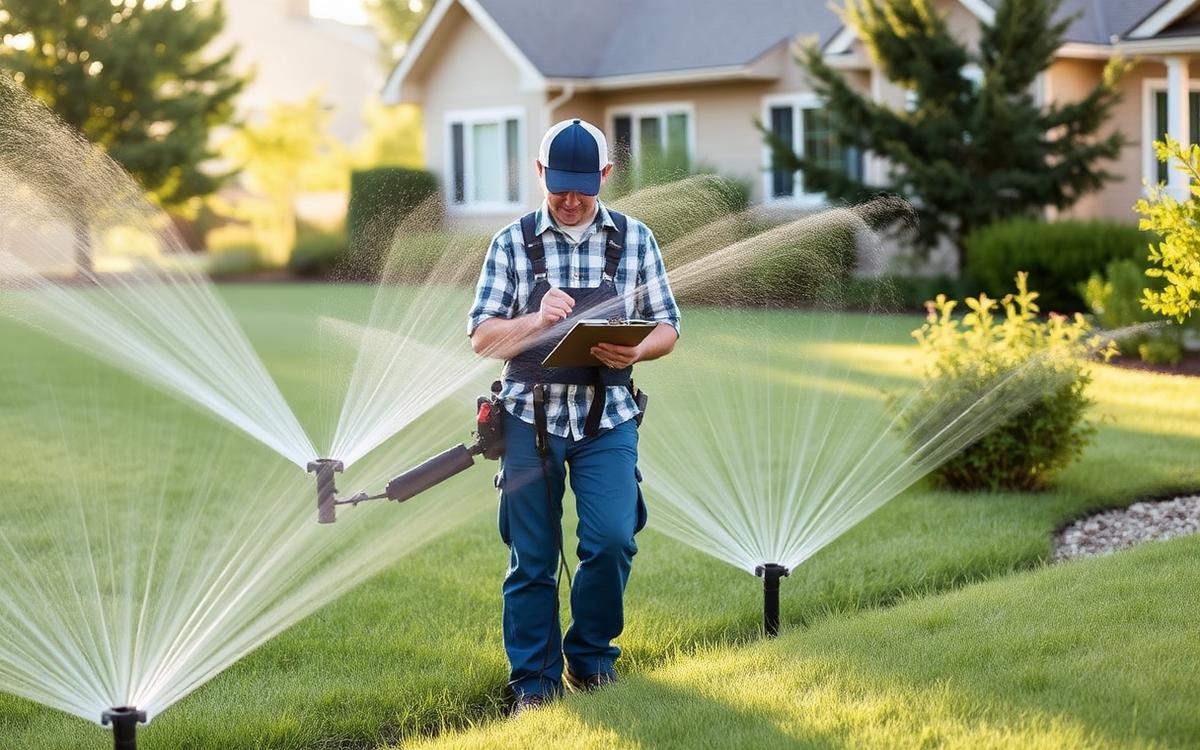
A proper sprinkler blowout uses a high-volume air compressor (typically 80–185 CFM) to push compressed air through each zone until every drop of water is cleared. A homeowner shop compressor usually doesn't move enough air to fully clear the lines — that's why DIY blowouts often leave water behind.
Here's what your technician should do:
- Shut off the main irrigation water supply
- Connect the compressor at the blowout port (downstream of the backflow)
- Activate each zone one at a time, blowing air through until only mist comes out
- Cycle each zone twice to clear trapped water
- Drain the backflow preventer and shut off bleeders
- Set the controller to "off" or "rain mode" for winter
Common Denver winterization mistakes
- Waiting too long. A surprise October freeze can do thousands in damage overnight.
- Skipping the backflow drain. Even with the zones blown out, water trapped in the backflow assembly will freeze and crack the brass.
- Forgetting drip zones. Drip lines and emitters need to be cleared too — they're easy to miss.
- Using too little air. Underpowered compressors leave water in the lines and create a false sense of security.
What about spring?
A proper winterization sets you up for an easy spring startup. When we come back in April or May, we re-pressurize the system slowly, check every zone for leaks or broken heads, recalibrate the controller, and adjust spray patterns for the season ahead.
Schedule your Denver-area blowout
Calaway Sprinklers handles seasonal winterization across Denver, Brighton, Thornton, Westminster, Arvada, Broomfield, Greeley, and the surrounding Front Range. We use high-capacity compressors, drain every component properly, and document any issues we find so spring startup is smooth.
Book early — October fills up fast. Contact us to get on the winterization schedule.